Tuesday, November 15, 2016

Saigon - The War Remnants Museum

Some of the bombs the Americans used - the 500 ponder in the back caused a 3km radius of damage

North Vietnamese General Giap who vanquished both the French & the Americans.  He lived to 102

US jet
We learn from our guide that the Vietnamese attitude to American war and Americans in general is to let bygones be bygones.  So we head off to the War Remnants Museum which outlines the Vietnamese version of the war, complete with captured American tanks, aircraft and bombs.  The displays have graphic photos and descriptions of the battles, the wounded, use of agent orange and a whole section devoted to Western correspondents who died covering the war.

For the most part it's not over the top propaganda pap and history has proven the domino theory and the Gulf of Tonkin incident to be false.  They even had quotes from former US Senator Wayne Morse who points out how the Americans flaunted the Geneva conventions laid out when the French were vanquished.  Mercifully, this war is over and everyone can move on.

US tank

Big Huey helicopter


Scenes from Saigon/stories about Vietnam


It would have been nice to cruise the Mekong closer to Saigon but the river delta gets shallow and unpredictable so we debark the Ama Dara and take a 2 hour bus ride to the centre of Saigon.

On the way we learn something about the major components of the Vietnamese economy:  1.  Rice as 50% of their exports, the Mekong delta being the powerhouse for that.  2.  Tourism  3. Seafood exports and 4. Tropical fruit

There are 10M people in Saigon and the first difference we notice from Hanoi is that the roads are wider.  Not that that matters too much – the traffic with cars and motorbikes is pretty awful.

There are 6M motorbikes but “only” 500,000 cars.  Part of the reason for that is the prohibitive 150% tax on cars that only the rich can afford.

Vietnam is essentially a capitalist economy with a communist political system.  Policy and government direction comes from Hanoi but there’s no doubt that Saigon is the economic engine of Vietnam.  There are many high rise buildings, construction cranes abound and when we look out our hotel window it could be any city in the world.

The old French Post Office building - an architectural jewel


Inside the Post Office - there's Uncle Ho

Beautiful iron arches

A map of old Saigon in the Post Office

The French and their iron posts and arches


Monday, November 14, 2016

The Viet Cong hideout in the Xeo Quyt Forest


This is a former Viet Cong command post where up to 19 VC Generals took up residence.  During the American Vietnam war it was not 2km from a major American base, yet it remained hidden.

In some ways this trip explained how difficult it must have been for the Americans to make any real progress against the VC.  The VC owned the night and during the day they could start a guerilla skirmish and then melt back into the jungle.

Local villagers, some of whom had been bombed by the Americans, supported the VC in covert ways.  One important duty was to leave food in hidden spots for them. 

The VC base we visited had a network of tunnels to support their activities.  They were well camouflaged under the forest canopy.

This camp was right on the Ho Chi Minh trail

The camp was protected by water

    
One of the tunnel entrances - no, we didn't go in


Another tunnel entrance

A so called spider trap - jump in and pull the lid down behind you!

The market in Sa Dec, Dong Thap Province


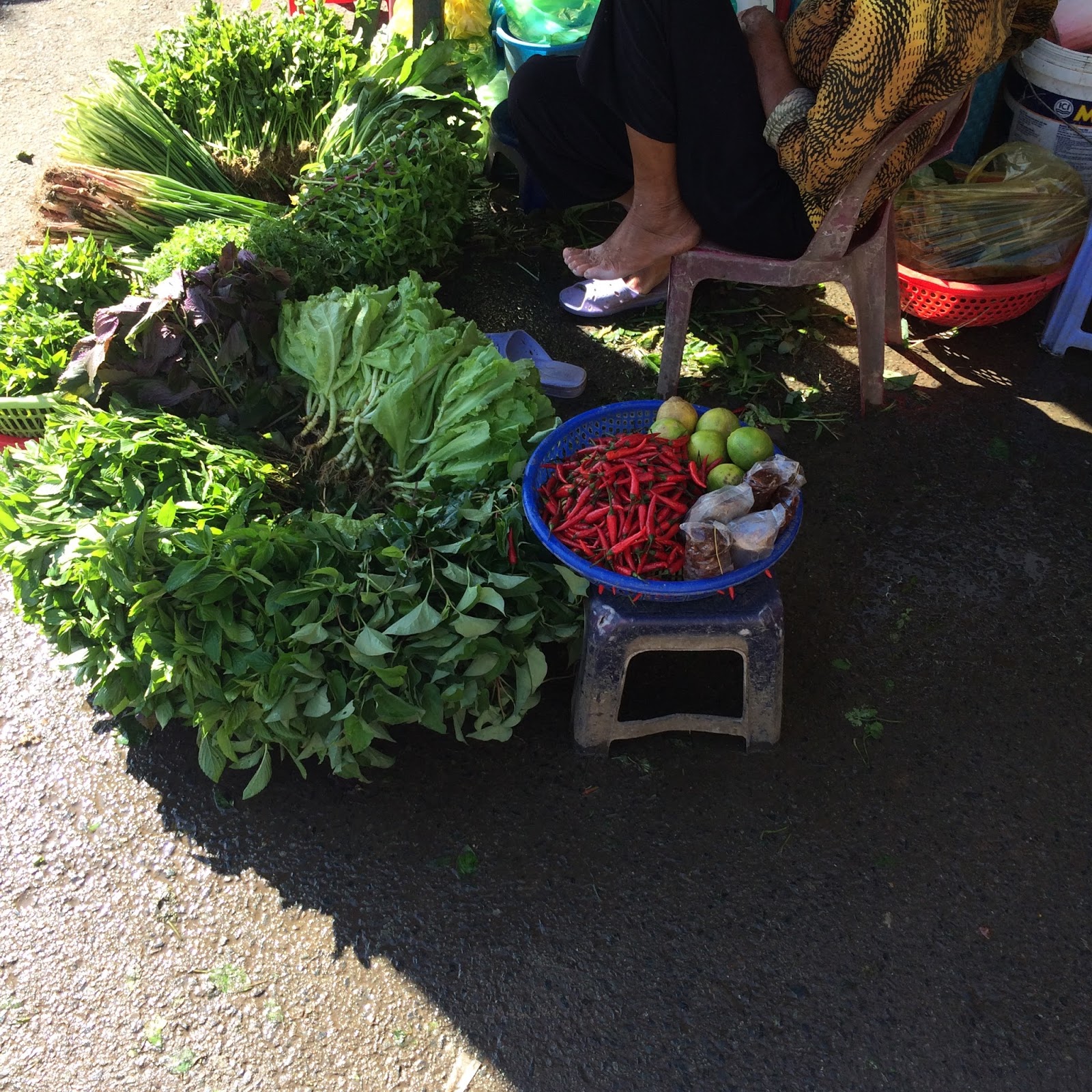
The town of Sa Dec with 118,000 inhabitants and their daily market is our next stop.  Apparently this market goes 360 days a year.  It’s incredibly busy and crowded with many stalls and everything there for food shopping needs.  Like Cambodia, shopping a couple of times during the day is the norm.

The walking area in the market is shared with motorbikes and we ease our way along enjoying the neatly laid out shopping areas.

An old French building that was part of a love story movie

Laid out for sale

All ready for customers


Rice anyone?

More rice selection

Cleaning the fish

The closest thing to sardines


Our only indulgence is buying a peaked rattan hat that will suit us well when we plant the paddy fields at the cottage, ha!

Once again the French influence is apparent with the road grid set up and some of the old colonial buildings.


A visit to Evergreen Island


There’s an island right in the middle of the Mekong River that’s home to about a 1,000 people.  The rich silt is ideal for growing corn and other crops.

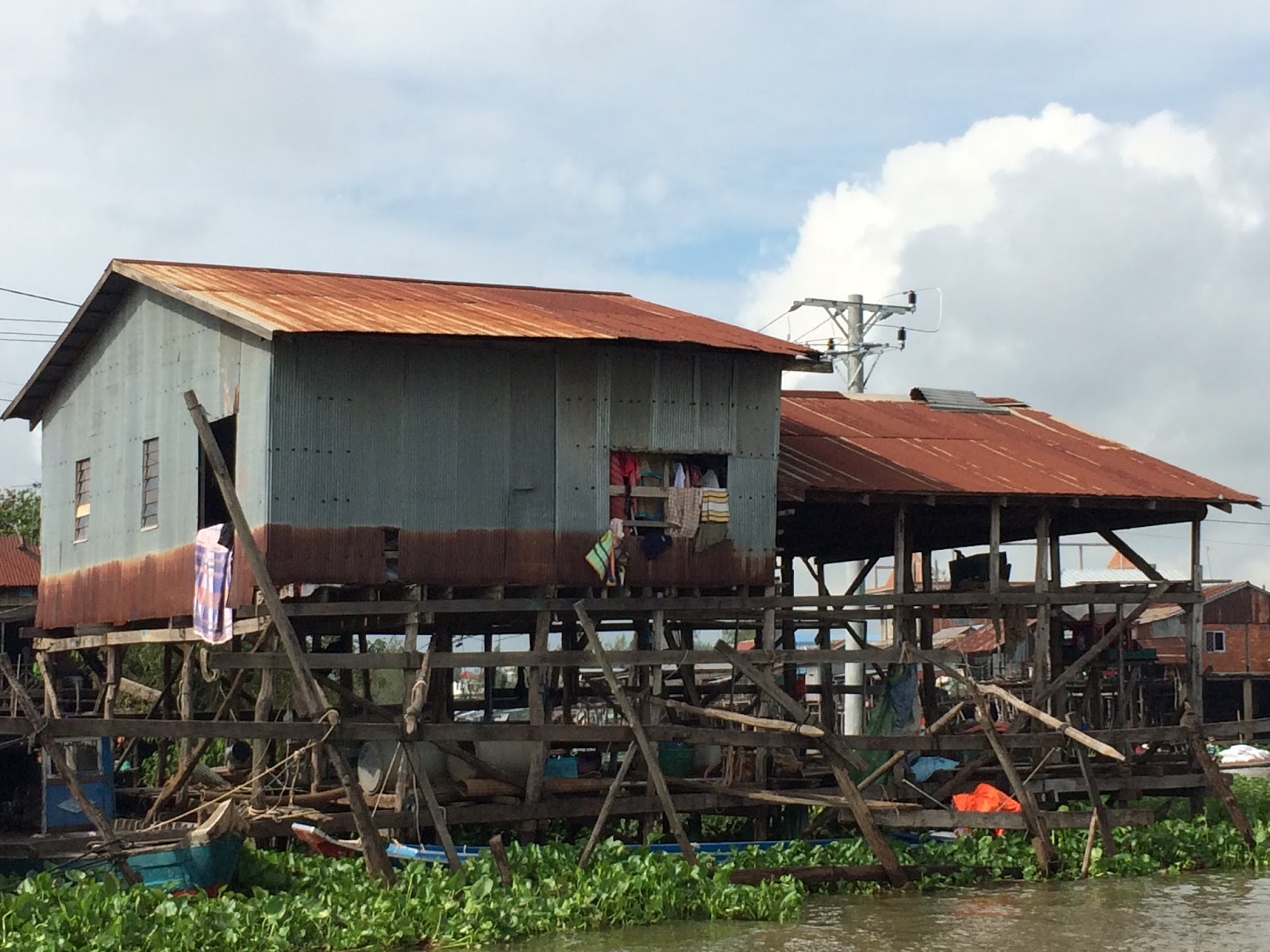
We walk down the narrow paths and see how they live and observe their lifestyle.  The homes are all on stilts, although the threat of Mekong flooding has waned in recent years as counties upstream are siphoning off the water for their own agriculture and hydro projects.

Home on stilts


A narrow bridge connects two parts of the island community.


The motorbike is the Ford F150 of Vietnam.


Happy kids are everywhere and want to wave and shake our hands. 


Cruising down the Mekong River


We see a number of dragon boats practicing on the Mekong as they prepare for a competition.  Some of the boats are quite long with enthusiastic paddlers wearing matched outfits.

A Dragon boat practicing....


In places, new bridges have been constructed to span the river, although ferry service is still needed in the long river stretches where there are no bridges.

There are many boats on the river of different provenance and use – some for working, some for tourists. 


A smaller tourist boat

A live and work boat

Another live and work boat


We learn that the Mekong River delta is the largest river delta in the world.  In addition to the Mekong River that branches into two tributaries as the delta forms, there are literally thousands of side waterways that support dwellings and boats of all types.  It’s a fertile area with farming and fishing the main economic activities.


The preferred second language in Vietnam is now English.  At one time it was French and after the end of the American Vietnam war, Russian was introduced.  But now the reality of the new Vietnam and its place in the world has made English the desired language skill.  That’s good for us as English speaking tourists as we’ve had little difficulty communicating effectively.

Phnom Penh Surroundings


A trip to a large Buddhist complex at Kampong Chhnang

We go to a new Buddhist community that has many buildings over a large area.  There is a very big pagoda with a huge Buddha and many illustrations on the walls that go from floor to ceiling.


That is one big Buddha!

Our first neon Buddha


We receive a blessing from a Buddhist monk in the pagoda.  From there we join the monk community, about 90 strong, for their meal and spoon out rice into their bowls. 

Monks enjoying the meal we helped serve


A rural experience – an ox cart ride

Hang on!

Although some mechanization of agriculture has taken place, the old methods of using farm animals and carts is still in use, even if some part of it is to inform tourists like use.  We kept our hands away from the big wheels and were able to walk at the end of the short trip through a rural village.  The kids loved waving at us.


Thursday, November 10, 2016

Cambodia - The Killing Fields


We visit one of the 389 killing fields of Cambodia from the murderous Pol Pot reign from 1975-79.  This part of the blog is not an easy read, but all credit to the Cambodians for dealing openly with an ugly part of their past.

Up to 20,000 people perished at this location and our guide told the story of who these people were and how they got there.  Pol Pot was influenced by Mao and decided to purge Cambodia of anyone who wasn’t a farmer or a peasant.  This included Cambodians who had been university educated, had studied abroad or had any contact or complicity with Americans or Russians.

After being taken to a prison and tortured into a “confession”, people were taken by truck to the killing fields where they were clubbed on the back of the head and then stabbed, although we learn that some people were buried alive.  Using bullets was deemed a waste.  Infants and children were smashed against trees.

In various display areas at the killing field are clothing rags that have washed up during flooding, as well as bones and teeth.  A pagoda has shelf after shelf of human skulls.

An innocent enough looking field where horrors took place

Clothing from murdered people

Bracelets from murdered children

A pagoda with shelves of skulls on display


We’ve lived our lives knowing of the atrocities of Stalin, Hitler and Mao and now we’re present to the Cambodian one of only 40 years ago.  The world was slow to realize what was happening and it only ended when the Vietnamese invaded Cambodia and threw Pol Pot and Khmer Rouge back into the jungle.

We then visited an infamous prison from that era and met two survivors both in their 80’s.  One was an artist, another a mechanic and their needed skills saved them from death.  There were photo displays of the victims which included not only Cambodians, but Indians, Pakistanis, Australians and New Zealanders.

A cell in a converted school

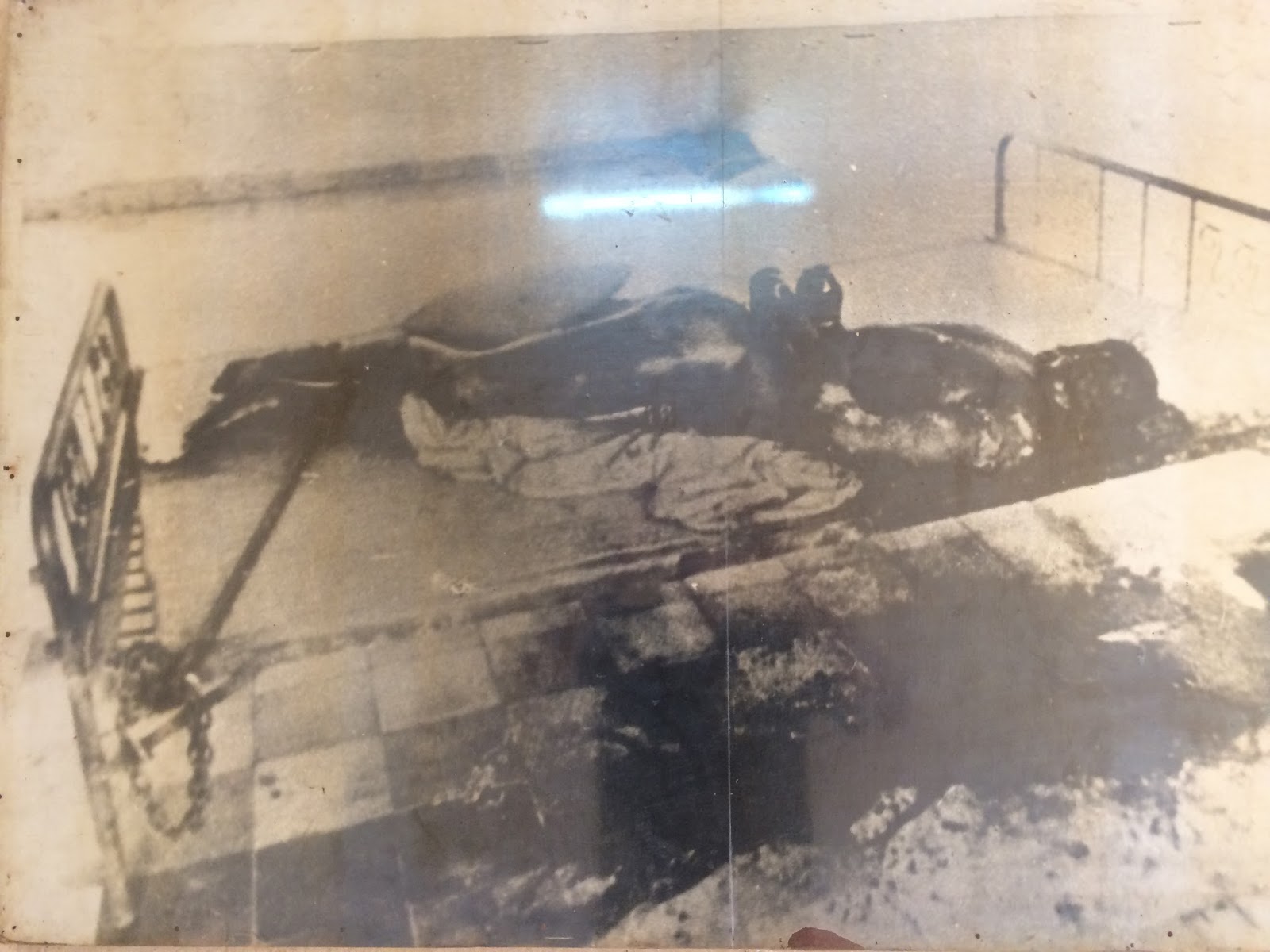
An old photo of the suffering inflicted on those incarcerated

Photos of the doomed

The inner courtyard of an infamous prison - SE -21


Boarding the Ama Dara on the Mekong River


It’s time to board the Ama Dara on the Mekong River

We leave the comforts of our 5 star hotel in Siem Reap and board a bus to join up with our riverboat.  Normally, it’s about a 2 hour ride but because of low water we have to take a longer route to a place where the boat can moor.

We stop a couple of times en route, once at a roadside market selling various insects for eating, eggs with embryos intact and cooked frogs stuffed with frogs.  A purchase of local candied plums helped us steer clear of the choices mentioned above.

We board the riverboat, the Ama Dara, our new home for the next 8 days and 7 nights.  Only two years old, it was specially designed to navigate in relatively shallow water with a 2M draft.  Powered by 2 800HP engines, we’ll cruise down the Mekong at a 5-7kph speed.


Our room on the first level has a lovely balcony and large windows for viewing all the sights.

The Mekong River is the 12th longest river in the world and the 7th longest in Asia.  It’s water starts with snow melt in the Tibetan Himalayas.  It’s 1-1.5 km. wide and depending on the season ranges from 10M to 20M deep.

Our first trip from the boat is by smaller vessel to view the floating community of about 5,000 people.  Fishing is the main activity but as we pass by the floating structures, everything is happening – raising pigs, keeping chickens, the equivalent of a floating 711, a floating gas station and even a floating banquet hall for weddings and other gatherings.  It’s all teeming with activity.  If you don’t like your neighbor (or they don’t like you) you can just move on to a different mooring place – a “benefit” not available to us city dwellers.  These floating homes need constant repair as the bamboo framing poles are renewed in place every 5 years.


There are many fish species including the Mekong giant catfish that can be as big as 700 pounds!  In our own stores at home we would know about commercially sold Mekong river catfish - sold under the name "Basa".

This lifestyle is being phased out by the government partly because of sanitation related health problems that leads to a lower life expectancy for river dwellers.  The plan is to move people to permanent dwellings on shore by 2018 and they would continue their fishing as normal.

When the water recedes, the rich silt allows 3 mixed crops to grow.